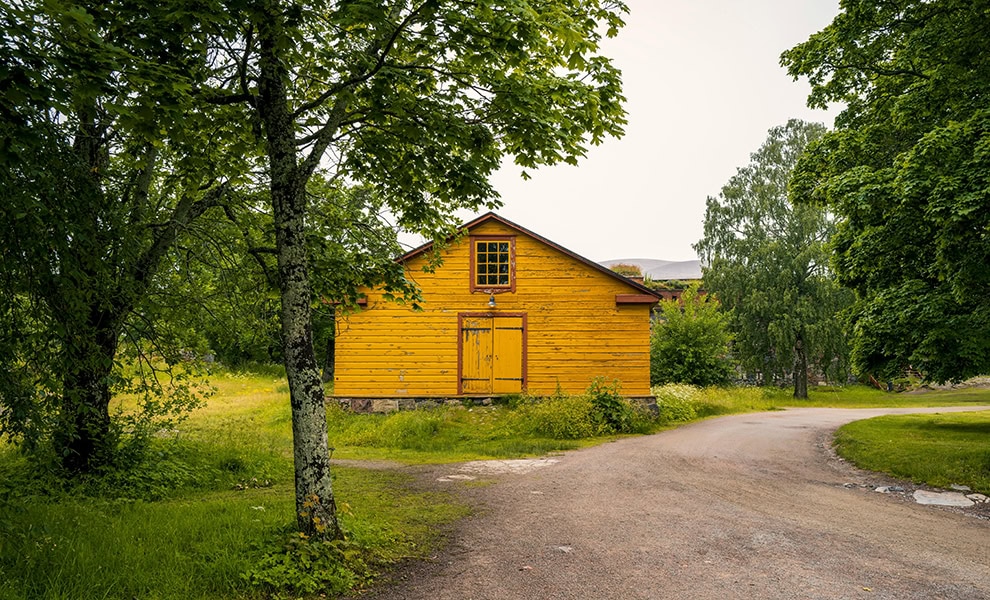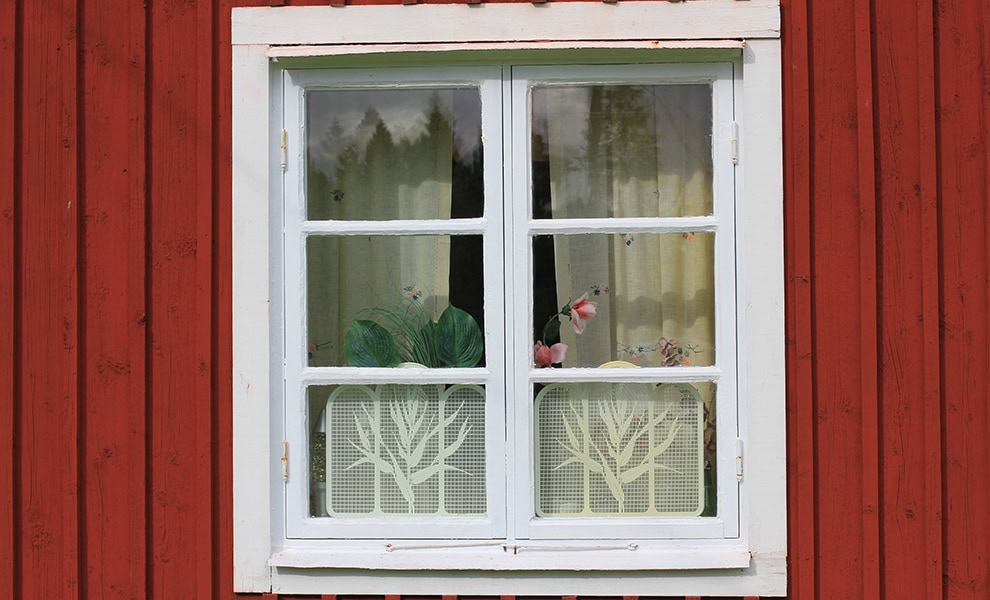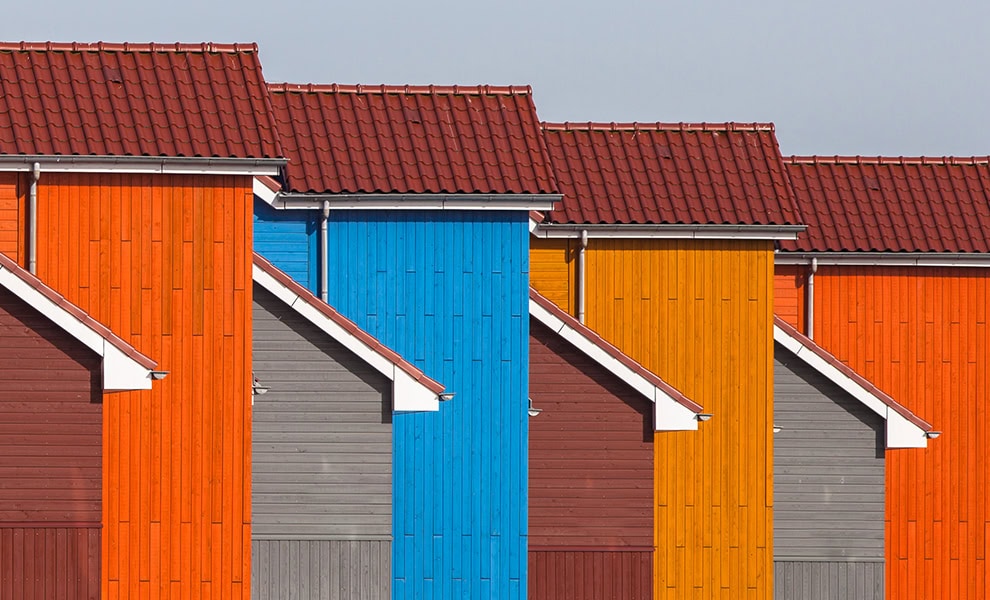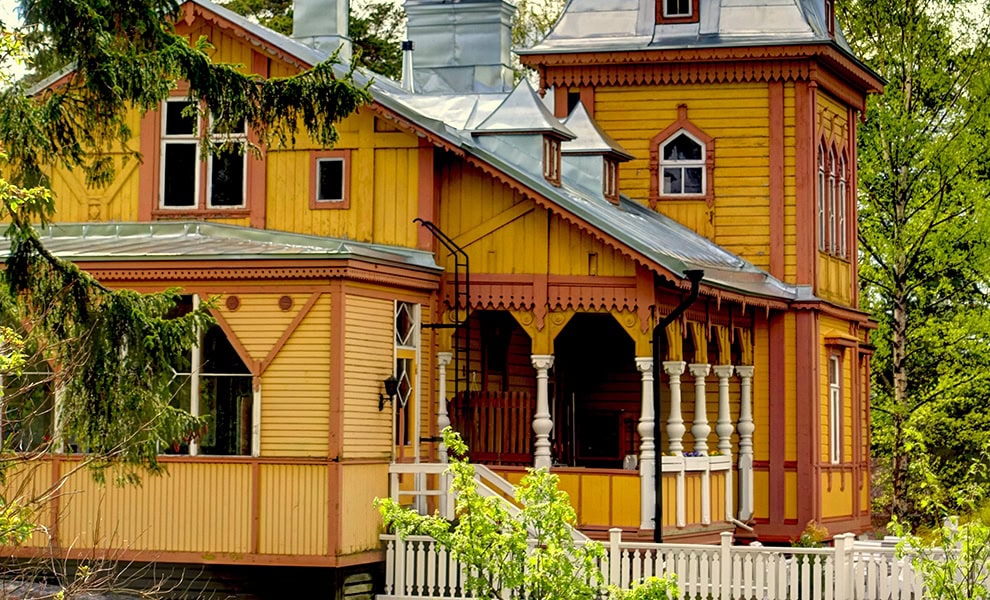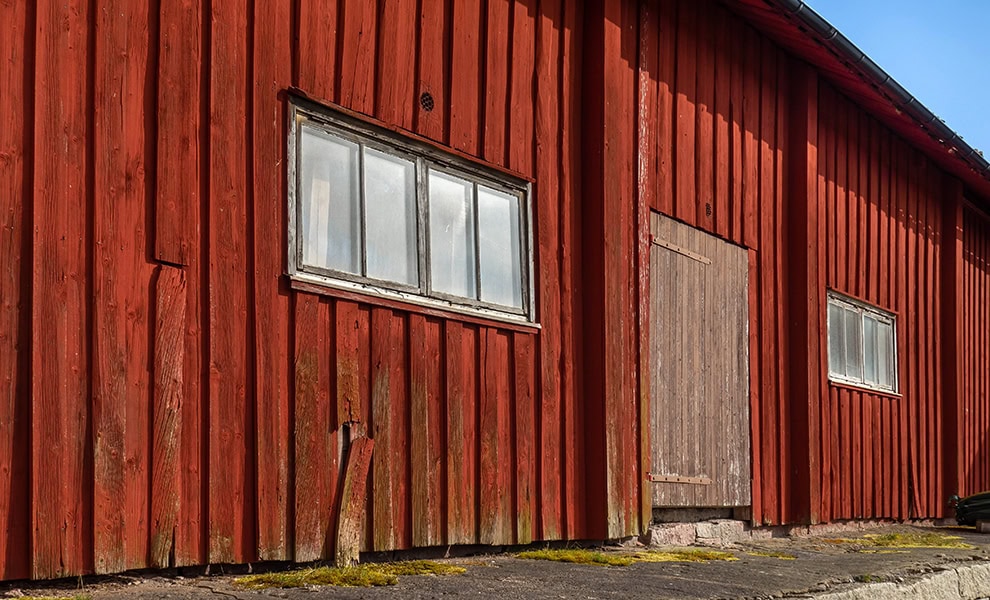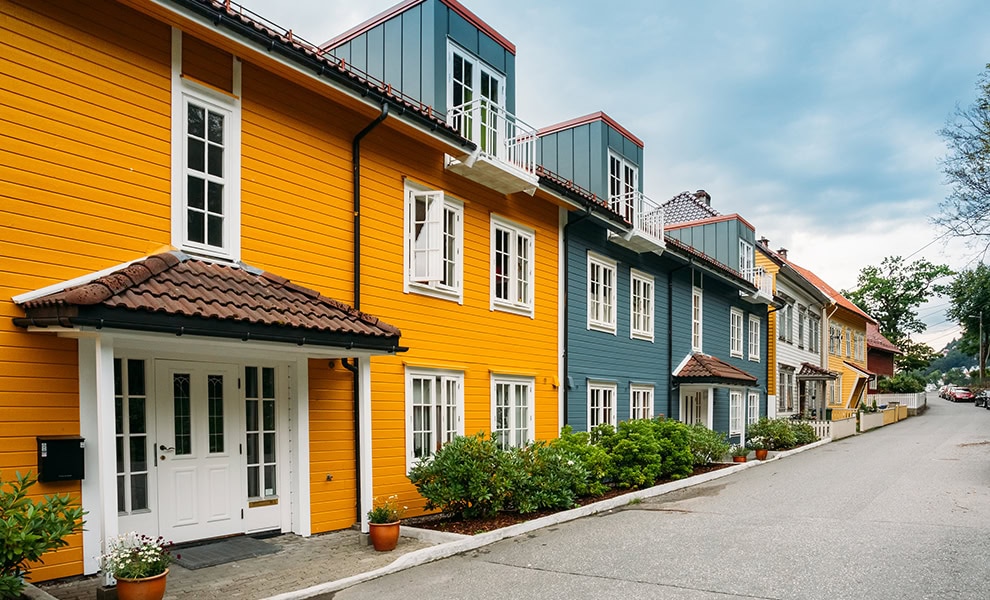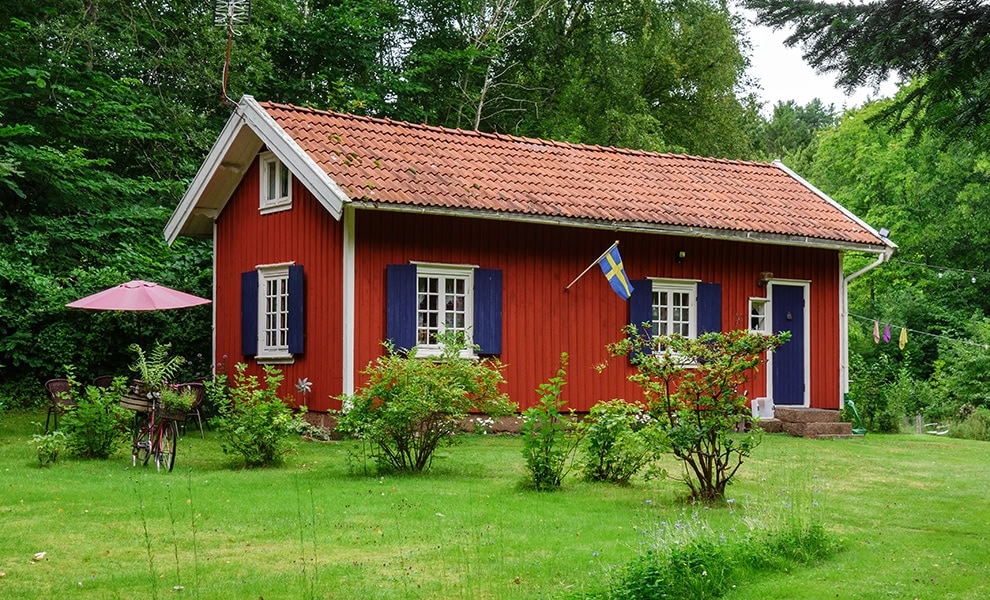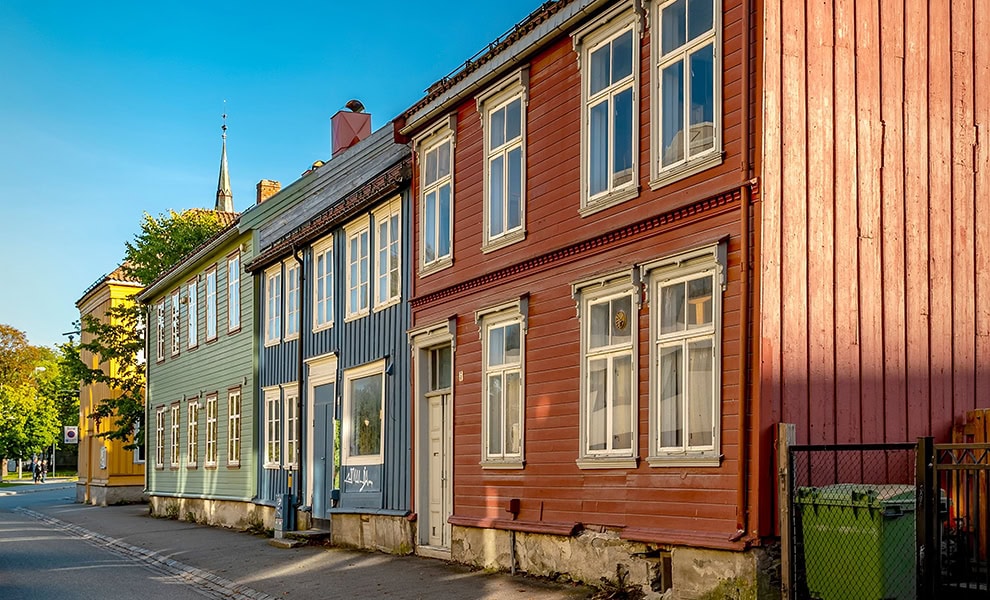
Flour paint is a traditional, natural, and environmentally friendly finish for wooden exteriors. It uses readily available ingredients and is cost-effective. The paint provides a non-toxic, breathable coating that protects wood from weathering while allowing moisture to escape, reducing the risk of rot. You add natural pigments to achieve a lovely palette of earthy hues that will beautifully set off your building or structure. Flour paint is particularly suited for historic or rustic houses, giving a durable, matte finish that ages gracefully, often developing a soft, natural patina over time. Suitable for vertical surfaces outside and bare or untreated wood inside.
Supplies/materials
-

- 1 litre water
-

- 100 g flour
-
- 300 g pigment
-
- 40 g iron sulphate
-

- 150 ml boiled linseed oil
Tools/equipment
-

- pan
-

- stirrer or whisk (concrete mixer or paddle for large volumes)
How to make Swedish flour paint for exterior woodwork
Try making “linoljefärg med järnsulfat”, a paint made with flour and linseed oil, which you can colour with any natural pigment.
1
- Put your water in the pan and bring it to the boil.
- Meanwhile, in a bowl, mix a small amount of cold water into the flour until it forms a runny paste (this is like making a roux in cooking).
- Once the water is boiling, add your paste to it and stir vigorously to mix it in. The mixture will quickly become thicker.
- Stirring regularly, simmer this mixture for 15 minutes.
2
- Now incorporate your pigment and your iron sulphate, stirring constantly as you go.
- Stirring regularly, simmer this mixture for another 15 minutes.
3
- Add you linseed oil.
- Keep stirring and simmer for another 15 minutes.
4
- Remove from the heat.
- After a few minutes, stir in your soap and mix thoroughly.
- Leave the paint to cool.
5
- Once cool, you can apply your paint! If you need, the paint will keep for up to two weeks if kept covered.
- Give it a good stir before you start painting. If it feels a bit thick, you can add a little water to achieve the best consistency.
- After your painting is done, the pan, stirrer, and brush can be washed in warm, soapy water. Best to only use this brush for oil-based paints in the future, though.
Notes about flour paint
If your wood has never been painted before, apply a first coat of watered-down paint and wait 24 hours before applying the ‘real’ coat. Water down by roughly 20%. You want a consistency that allows you to work the paint into the grain.
Best applied with a large brush.
This paint is only suitable for vertical surfaces outside. If you have flat areas that will experience rain and snow and stay wet for periods of time, a different paint will be needed.
You can also use it inside where wood has a suitable finish (clean, dry, and bare/untreated).
The classic version of this paint is totally opaque. You can, though, use less pigment for a more translucent finish that allows the wood to show through – adjusting the pigment ratio will not affect the recipe, and your paint will work just fine.
Frequently asked questions (FAQ)
What are the environmental impacts of industrial paint?
Paint has a significant impact on the environment:
- Carbon emissions: Paint production involves very energy-intensive processes which may not be powered with clean energy.
- Water use and pollution: Producing them requires hundreds of millions of litres of water every day. An estimated 70% of the wastewater from paint manufacturing is released into natural bodies of water, causing severe pollution. Around 40% of microplastics in the ocean come from paint particles.
- Air pollution: Paints emit volatile organic compounds (VOCs), chemicals that evaporate easily into the air and contribute to ozone and peroxyacetyl nitrate (PAN) formation, which affects air quality.
- Waste and disposal: Leftover paint buckets are a messy problem to deal with. Improper disposal of paint introduces toxic waste into the environment, with a significant portion of waste being disposed of rather than recycled.
What are the health impacts of industrial paint?
The volatile organic compounds (VOCs) emitted by paints can cause eye irritation, breathing difficulties, headaches, nausea, and even long-term effects like kidney damage, nervous system damage, or cancer.
Why is flour paint 'better' for wood?
Classic industrial wood paint is oil-based, and the ‘oil’ is often an alkyd resin derived from petrochemicals. This synthetic polymer – chemically similar to plastic – creates a very watertight layer on the wood. Wood is hygroscopic, which means it naturally ‘breathes’, i.e., it absorbs and releases moisture. Slow, controlled vapour exchange doesn’t usually harm it; problems only arise when moisture is trapped by impermeable coatings. If the wood cannot breathe, you are likely to end up having problems with mould, swelling, and cracking.
Another issue is maintenance. Hard, non-porous films tend to peel rather than wear gradually, so ‘old’ paint can become unsightly. Modern paint formulas often need to be sanded extensively (or scraped off completely if damaged) before repainting, so there is extra preparation to do before you can refresh your paintwork. With flour paint, you don’t have either of these issues. Although the paint will weather over time, and the colour will fade a little, it doesn’t flake off and keeps protecting your wood. When the time comes for you to repaint, simply brush any dirt with a steel brush and reapply fresh paint.